Our Federation History Curriculum
We value the richness of learning and the range of opportunities which allow children and adults to think, question and explore. We want our children to be filled with a recurring sense of awe and wonder, and encourage their natural curiosity and imagination to be inquisitive, innovative and creative. Together we seek to broaden horizons and develop the knowledge, skills and confidence to flourish in the wider world. (LPGD 2021-22)
Rationale - What has informed our curriculum design in history?
It is our belief that, at the Calstock and Stoke Climsland Federation, the history curriculum should enable children to have a better understanding of the present by engaging with and questioning the past: it should empower learners to develop their own opinions based on a respect for evidence. The History curriculum is vast and needs expert interpretation. To meet this need, our Federation has employed the Kapow scheme of work. Kapow offers thorough coverage, excellent resources and engaging learning opportunities for pupils in Key Stage 1 and 2. We want our history curriculum to draw upon, and make full use of, the immediate and wider local area with the aim of enabling children to develop a deep understanding of the rich history of their locality. For this reason and where appropriate, each Kapow unit is enhanced with opportunities to explore local history in the context of the period studied. We also want to encourage children to be outward looking and therefore want our curriculum to promote an understanding of global history through the comparison of different civilisations. To this end, we ensure that teachers are provided with links to local museums, galleries and sites of interest to explore more widely.
Intent - What are our aims?
We aim to equip our pupils with the knowledge and skills needed to:
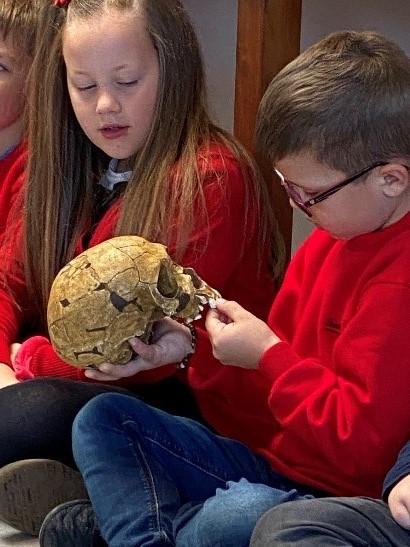
- Interpret the past through an awareness that understanding the past comes from an interpretation of the available evidence
- Develop an appreciation of the characteristic features of the past and an understanding that life is different for different sections of society
- Cultivate an understanding of how to chart the passing of time and how some aspects of history were happening at similar times in different places
- Use historical vocabulary and techniques to convey information about the past
Our history curriculum is designed to develop both historical (substantive) knowledge and historical (disciplinary) skills, which are progressive, as well as transferable, throughout their learning journey at school and beyond. We also aim to equip pupils with a clear understanding of what it means to be working as a historian and the skills that this entails.
Across the curriculum at Calstock and Stoke Climsland, we aim to develop children’s cultural capital and local knowledge. In history, as well as learning about the local area and a variety of places around the world we also place importance on learning about key themes, events and people with the aim that children learn about the impact of individuals, groups of people and their actions, as well as the changes in society across the arts, design, sciences, engineering and social sciences.
Implementation: How do we teach history?
Using the Kapow scheme of work, which has been tailored to our locality, History at Calstock and Stoke Climsland is taught in blocks throughout the year, so that children can achieve depth in their learning. The key knowledge and skills of each topic and sequence of learning, ensure full coverage of the National Curriculum. We build upon the learning and skill development of the previous lessons, units and years, ensuring that opportunities to revisit prior learning are planned. Knowledge organisers ensure that, across all age groups, both knowledge and skills (know that and know how) are explicitly identified and that all teachers are aware of prior learning and next steps.
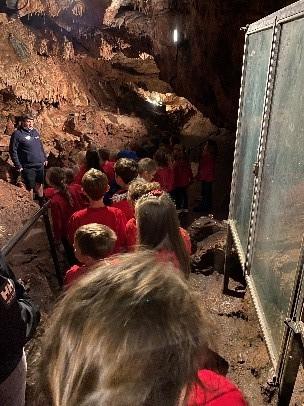
History lessons are delivered by class teachers through carefully planned discrete units of work. Our knowledge organisers identify the most salient knowledge, vocabulary and disciplinary skills that will be covered in each unit, with a focus on making these useful to the pupils. These knowledge organisers are used both in lessons and at home to reinforce learning. Our curriculum is progressive. Teachers use precise questioning in class to test conceptual knowledge and skills. Continuous formative assessment identifies those children with gaps in learning, so that all children can fully access the learning. Opportunities are planned in across the year for pupils to put their skills into practice and gain first-hand experience during class trips as frequently as possible. In upper KS2, pupils also have the opportunity to participate in residential study visits.
Work is recorded in humanities books and sometimes floorbooks and can be evidenced in a range of ways, including written pieces, photographs, art work and displays.
The Early Years Foundation Stage (EYFS) follows statutory framework. History is taught, shared and assessed through the specific area of Early Years Foundation Stage: Understanding the World ELG: Past and Present
Impact: How will we know this?
As a result of our history provision across the federation, children will be equipped with the knowledge and skills to investigate the world around them, resulting in learners who are keen and motivated to work as historians.
In our historians, we expect to see:
• A passion for history and an enthusiastic engagement in learning, which develops their sense of curiosity about the past and their understanding of how and why people interpret the past in different ways.
- An excellent knowledge and understanding of themes, people, events, and contexts from a range of historical periods and of historical concepts and processes.
• The ability to think critically about history and communicate ideas confidently in styles appropriate to a range of audiences.
• The ability to consistently support, evaluate and challenge their own and others’ views using detailed, appropriate and accurate historical evidence derived from a range of sources.
• The ability to think, reflect, debate, discuss and evaluate the past, formulating and refining questions and lines of enquiry.
• A respect for historical evidence and the ability to make robust and critical use of it to support their explanations and judgments.
• A desire to embrace challenging activities, including opportunities to undertake high-quality research across a range of history topics.
The impact of the curriculum in History is monitored through a range of assessment (see federation assessment framework). These include:
- Learning conversations – pupils are able to talk confidently about their learning in geography to adults and to each other.
- Low stakes assessment - children show good recall of key concepts taught in previous lessons and terms e.g. quizzes, using visuals, true and false questions etc.
- Reflection and review of work in books, displays and pupil response within lessons.
- Images and videos of the children’s practical learning.
- Observed learning by the teaching team within class, recorded in Assessment Trackers to keep an ongoing record of each child’s progress.
- Lesson visits from other members of staff.
Additional assessment opportunities may also include:
· self-assessment, peer-assessment, group assessment and targeted questioning.

Pupils will leave Calstock or Stoke Climsland Schools with an understanding of how our island history has led to us living the lives we have today; the impact that this has had on other global communities; an understanding of various historical civilisations and their relationship with each other; understanding of the big themes in history and an ability to critically evaluate material in order to formulate their own opinions.